




CBSE Class 12 Economics Set 1 - (58/4/1) Question Paper 2026 is available for download here. CBSE conducted the Class 12 Economics exam on March 18, 2026, from 10:30 AM to 1:30 PM. The Economics theory paper is of 80 marks, and the internal assessment is of 20 marks.
Also Check: CBSE Class 12 Question Paper 2026 (All Subjects)
The question paper has 34 questions, all compulsory, for 80 marks:
- Section A is Macro Economics and Section B is Indian Economic Development
- 20 multiple choice questions of 1 mark each
- 4 Short Answer Type-I questions of 3 marks each (60 to 80 words)
- 6 Short Answer Type-II questions of 4 marks each (80 to 100 words)
- 4 Long Answer type questions of 6 marks each (100 to 150 words)
- There is no overall choice, but internal choice is given in a few questions
CBSE Class 12 Economics Set 1 - (58/4/1) Question Paper 2026 with Solution PDF
| CBSE Official PDF | CD PDF | CD PDF with Solutions |
|---|---|---|
| Download official PDF 0.69 MB | Download Collegedunia PDF 0.53 MB | – |
CBSE Class 12 Economics 2026 Set 1 (58/4/1) Questions with Solutions
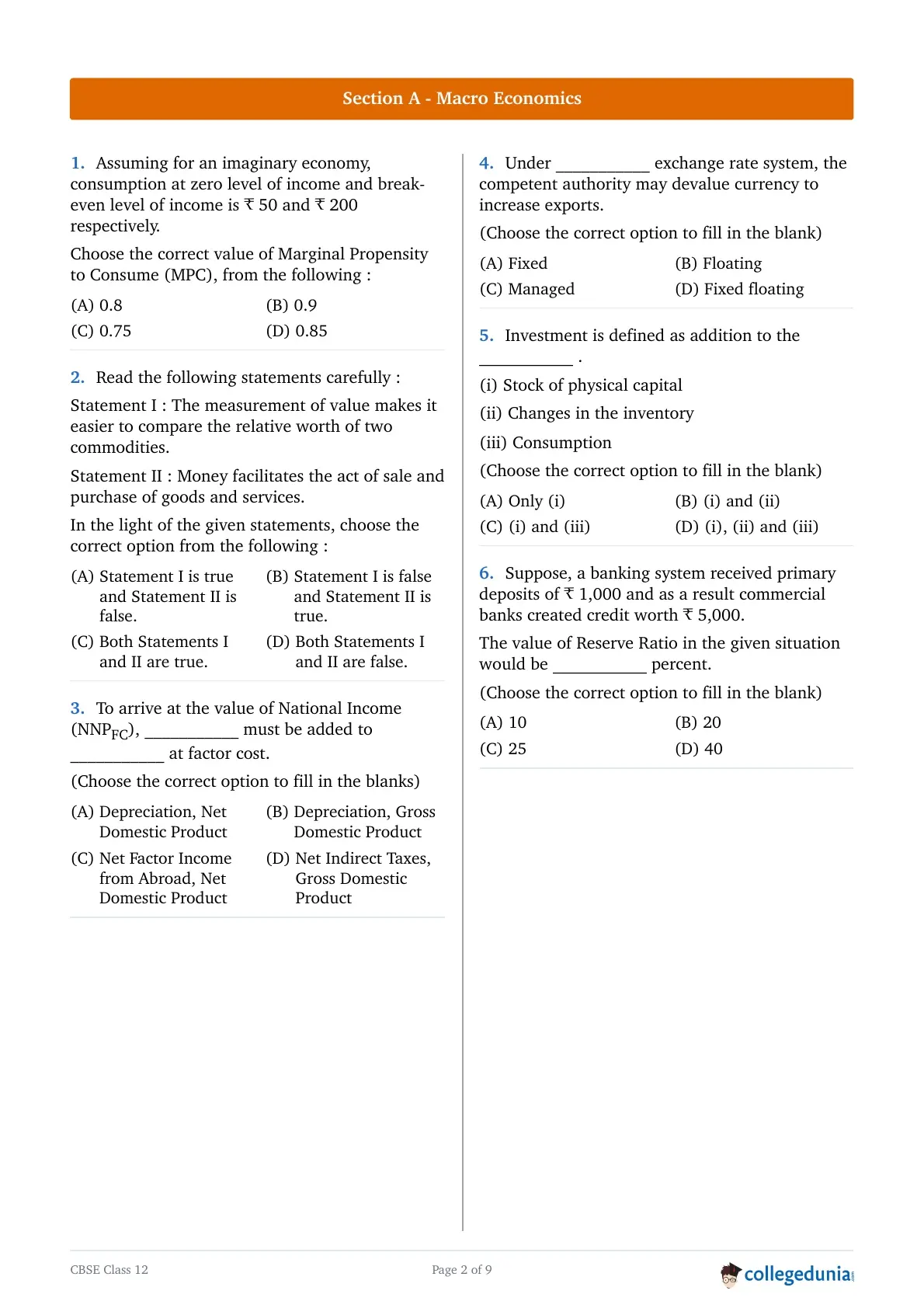
Assuming for an imaginary economy, consumption at zero level of income and break-even level of income is ₹ 50 and ₹ 200 respectively.
Choose the correct value of Marginal Propensity to Consume (MPC), from the following :
Read the following statements carefully :
Statement I : The measurement of value makes it easier to compare the relative worth of two commodities.
Statement II : Money facilitates the act of sale and purchase of goods and services.
In the light of the given statements, choose the correct option from the following :
To arrive at the value of National Income (NNPFC), ___________ must be added to ___________ at factor cost.
(Choose the correct option to fill in the blanks)
Under ___________ exchange rate system, the competent authority may devalue currency to increase exports.
(Choose the correct option to fill in the blank)
Investment is defined as addition to the ___________ .
(i) Stock of physical capital
(ii) Changes in the inventory
(iii) Consumption
(Choose the correct option to fill in the blank)
Suppose, a banking system received primary deposits of ₹ 1,000 and as a result commercial banks created credit worth ₹ 5,000.
The value of Reserve Ratio in the given situation would be ___________ percent.
(Choose the correct option to fill in the blank)
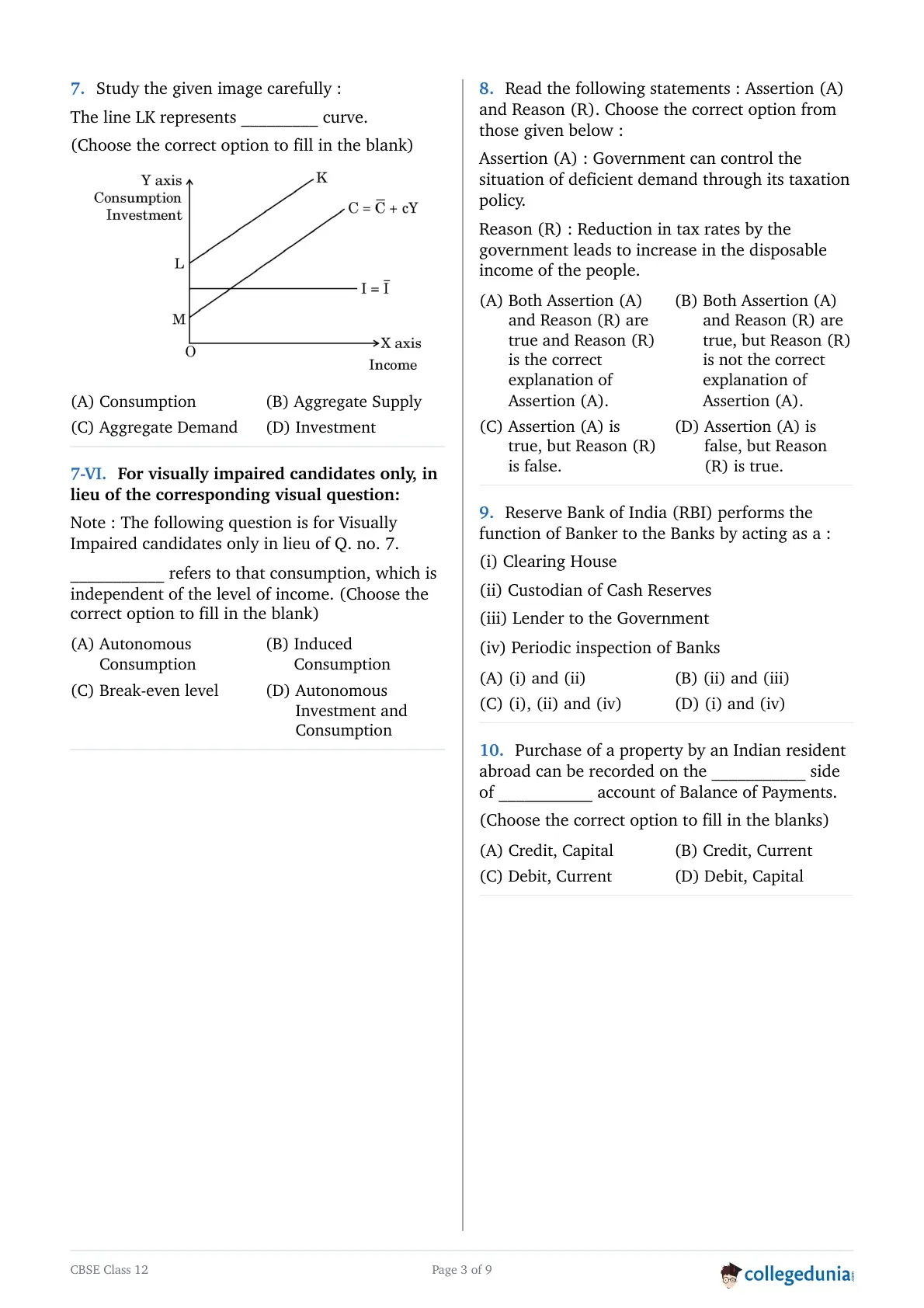
Study the given image carefully :
The line LK represents _________ curve.
(Choose the correct option to fill in the blank)

Read the following statements : Assertion (A) and Reason (R). Choose the correct option from those given below :
Assertion (A) : Government can control the situation of deficient demand through its taxation policy.
Reason (R) : Reduction in tax rates by the government leads to increase in the disposable income of the people.
Reserve Bank of India (RBI) performs the function of Banker to the Banks by acting as a :
(i) Clearing House
(ii) Custodian of Cash Reserves
(iii) Lender to the Government
(iv) Periodic inspection of Banks
Purchase of a property by an Indian resident abroad can be recorded on the ___________ side of ___________ account of Balance of Payments.
(Choose the correct option to fill in the blanks)
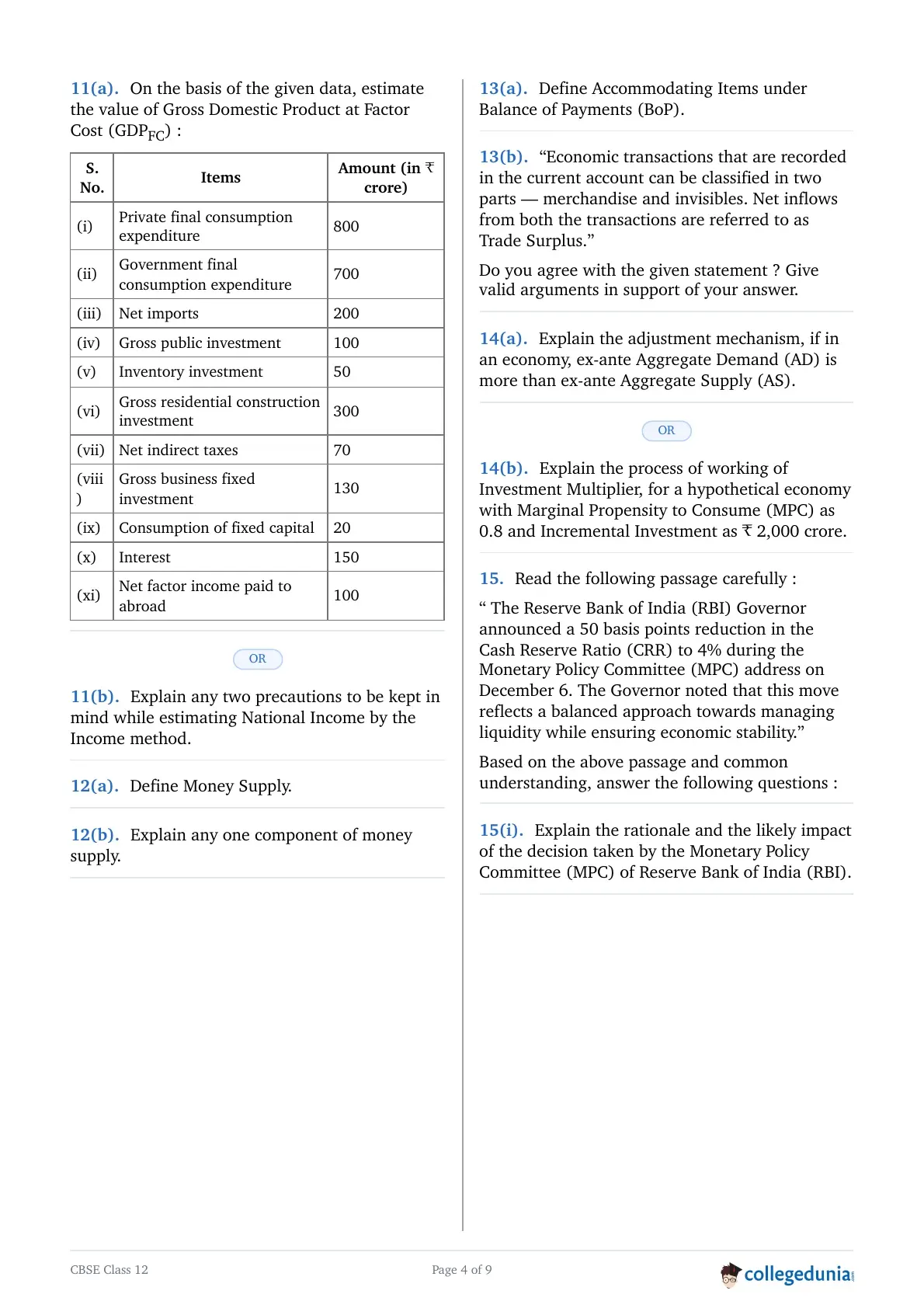
On the basis of the given data, estimate the value of Gross Domestic Product at Factor Cost (GDPFC) :
| S. No. | Items | Amount (in ₹ crore) |
|---|---|---|
| (i) | Private final consumption expenditure | 800 |
| (ii) | Government final consumption expenditure | 700 |
| (iii) | Net imports | 200 |
| (iv) | Gross public investment | 100 |
| (v) | Inventory investment | 50 |
| (vi) | Gross residential construction investment | 300 |
| (vii) | Net indirect taxes | 70 |
| (viii) | Gross business fixed investment | 130 |
| (ix) | Consumption of fixed capital | 20 |
| (x) | Interest | 150 |
| (xi) | Net factor income paid to abroad | 100 |
Explain any two precautions to be kept in mind while estimating National Income by the Income method.
“Economic transactions that are recorded in the current account can be classified in two parts — merchandise and invisibles. Net inflows from both the transactions are referred to as Trade Surplus.”
Do you agree with the given statement ? Give valid arguments in support of your answer.
Explain the adjustment mechanism, if in an economy, ex-ante Aggregate Demand (AD) is more than ex-ante Aggregate Supply (AS).
Explain the process of working of Investment Multiplier, for a hypothetical economy with Marginal Propensity to Consume (MPC) as 0.8 and Incremental Investment as ₹ 2,000 crore.
Comprehension:
Read the following passage carefully :
“ The Reserve Bank of India (RBI) Governor announced a 50 basis points reduction in the Cash Reserve Ratio (CRR) to 4% during the Monetary Policy Committee (MPC) address on December
Read More
6. The Governor noted that this move reflects a balanced approach towards managing liquidity while ensuring economic stability.”Based on the above passage and common understanding, answer the following questions :
Explain the rationale and the likely impact of the decision taken by the Monetary Policy Committee (MPC) of Reserve Bank of India (RBI).
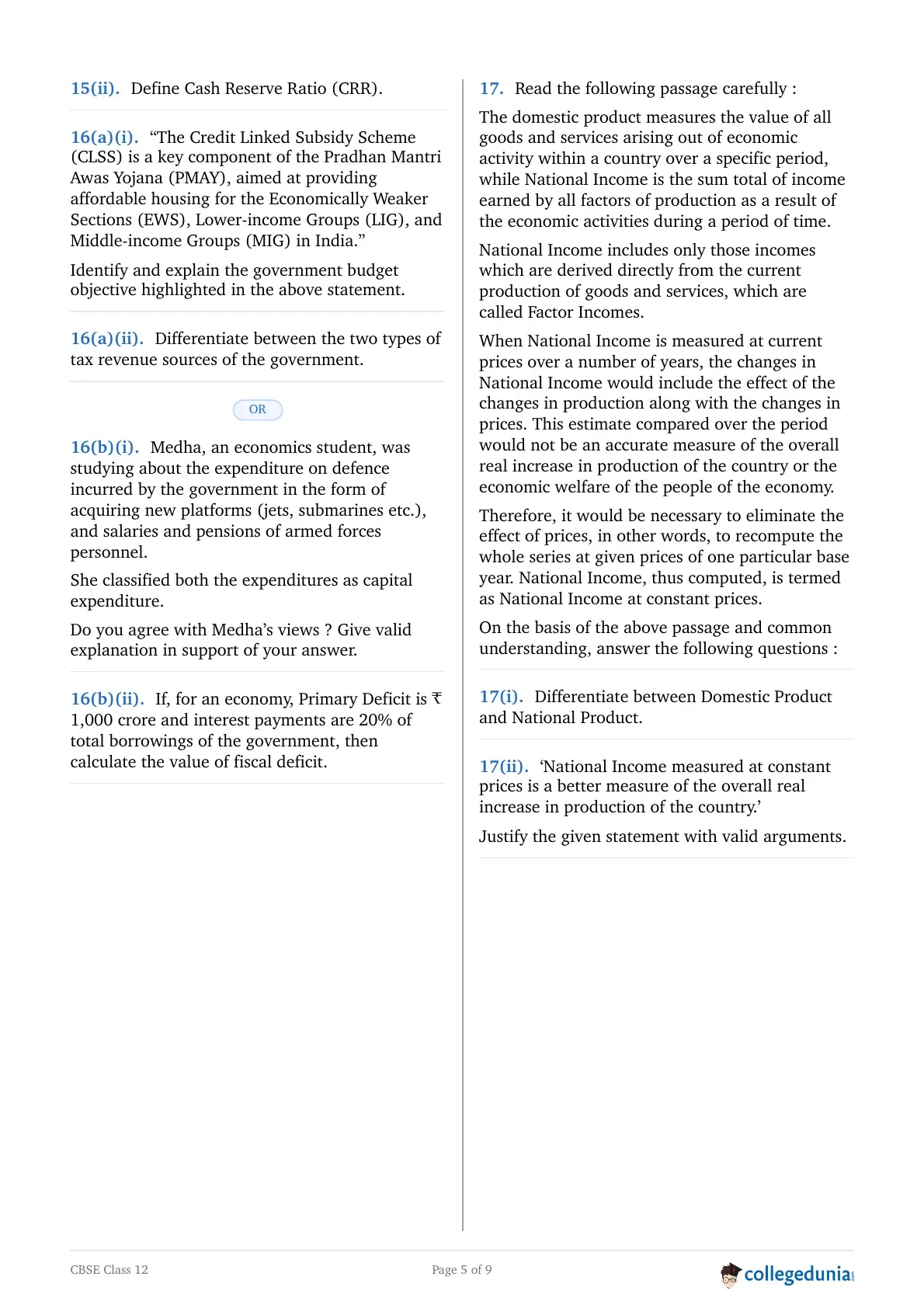
“The Credit Linked Subsidy Scheme (CLSS) is a key component of the Pradhan Mantri Awas Yojana (PMAY), aimed at providing affordable housing for the Economically Weaker Sections (EWS), Lower-income Groups (LIG), and Middle-income Groups (MIG) in India.”
Identify and explain the government budget objective highlighted in the above statement.
Differentiate between the two types of tax revenue sources of the government.
Medha, an economics student, was studying about the expenditure on defence incurred by the government in the form of acquiring new platforms (jets, submarines etc.), and salaries and pensions of armed forces personnel.
She classified both the expenditures as capital expenditure.
Do you agree with Medha’s views ? Give valid explanation in support of your answer.
If, for an economy, Primary Deficit is ₹ 1,000 crore and interest payments are 20% of total borrowings of the government, then calculate the value of fiscal deficit.
Comprehension:
Read the following passage carefully :
The domestic product measures the value of all goods and services arising out of economic activity within a country over a specific period, while National Income is the sum total of income earned by all factors of production as a result of the economic activities during a period of time.
National Income includes only those incomes which are derived directly from the current production of goods and services, which are called Factor Incomes.
When National Income is measured at current prices over a number of years, the changes in National Income would
Read More
include the effect of the changes in production along with the changes in prices. This estimate compared over the period would not be an accurate measure of the overall real increase in production of the country or the economic welfare of the people of the economy.Therefore, it would be necessary to eliminate the effect of prices, in other words, to recompute the whole series at given prices of one particular base year. National Income, thus computed, is termed as National Income at constant prices.
On the basis of the above passage and common understanding, answer the following questions :
‘National Income measured at constant prices is a better measure of the overall real increase in production of the country.’
Justify the given statement with valid arguments.
Read the following statements carefully :
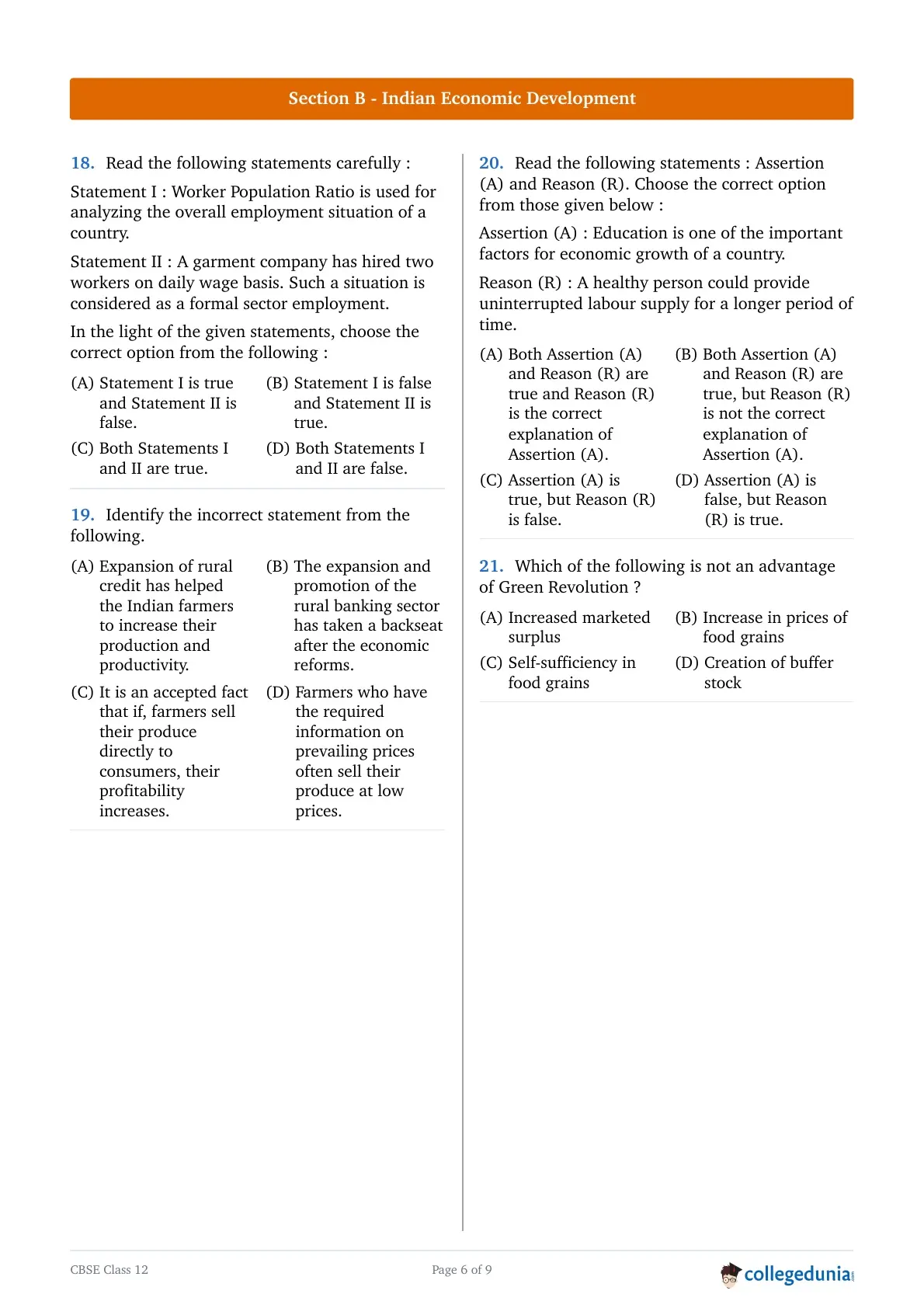
Statement I : Worker Population Ratio is used for analyzing the overall employment situation of a country.
Statement II : A garment company has hired two workers on daily wage basis. Such a situation is considered as a formal sector employment.
In the light of the given statements, choose the correct option from the following :
Read the following statements : Assertion (A) and Reason (R). Choose the correct option from those given below :
Assertion (A) : Education is one of the important factors for economic growth of a country.
Reason (R) : A healthy person could provide uninterrupted labour supply for a longer period of time.

Read the following statements carefully :
Statement I : Diversification in agriculture relates to change in cropping pattern and shift in workforce to allied activities.
Statement II : Agricultural marketing is a process that involves the assembling, storage, processing, transportation, packaging, grading and distribution of agro-products.
In the light of the given statements, choose the correct option from the following :
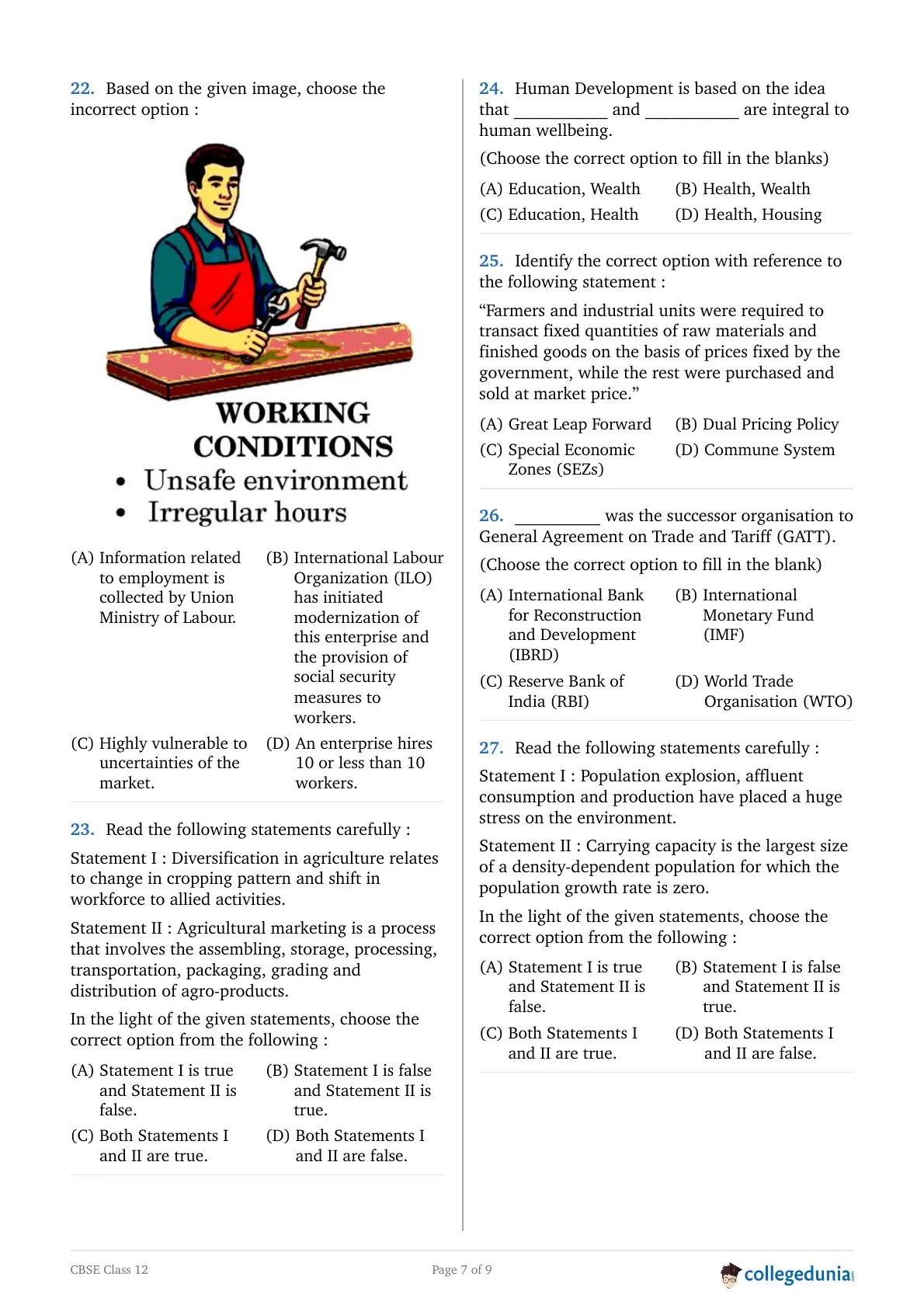
Human Development is based on the idea that ___________ and ___________ are integral to human wellbeing.
(Choose the correct option to fill in the blanks)
Identify the correct option with reference to the following statement :
“Farmers and industrial units were required to transact fixed quantities of raw materials and finished goods on the basis of prices fixed by the government, while the rest were purchased and sold at market price.”
__________ was the successor organisation to General Agreement on Trade and Tariff (GATT).
(Choose the correct option to fill in the blank)
Read the following statements carefully :
Statement I : Population explosion, affluent consumption and production have placed a huge stress on the environment.
Statement II : Carrying capacity is the largest size of a density-dependent population for which the population growth rate is zero.
In the light of the given statements, choose the correct option from the following :
Anaya and Rohan owned separate farms. Anaya focused on learning modern farming techniques, training workers in crop rotation, soil management, and pest control.
On the other hand, Rohan invested in advanced machinery, irrigation systems, HYV seeds.
“Both Anaya and Rohan invested in human capital.”
Do you agree with the given statement ? Give valid argument in support of your answer.
“Expenditure on preventive medicine, curative and social medicine helps in building human capital and economic development.”
Do you agree with the given statement ? Give valid argument in support of your answer.
“Infrastructural upliftment of India was one of the key features of the British rule in India.”
State and discuss any two such developments, in the light of the given statement, with self-serving interests of the British.
“In the post-independence era, India adopted a protective tariff policy.”
Do you agree with the given statement ? Justify your answer with any two valid arguments.
Elaborate, how the efforts of various governments in India have helped in generation of employment, directly or indirectly, in the nation.
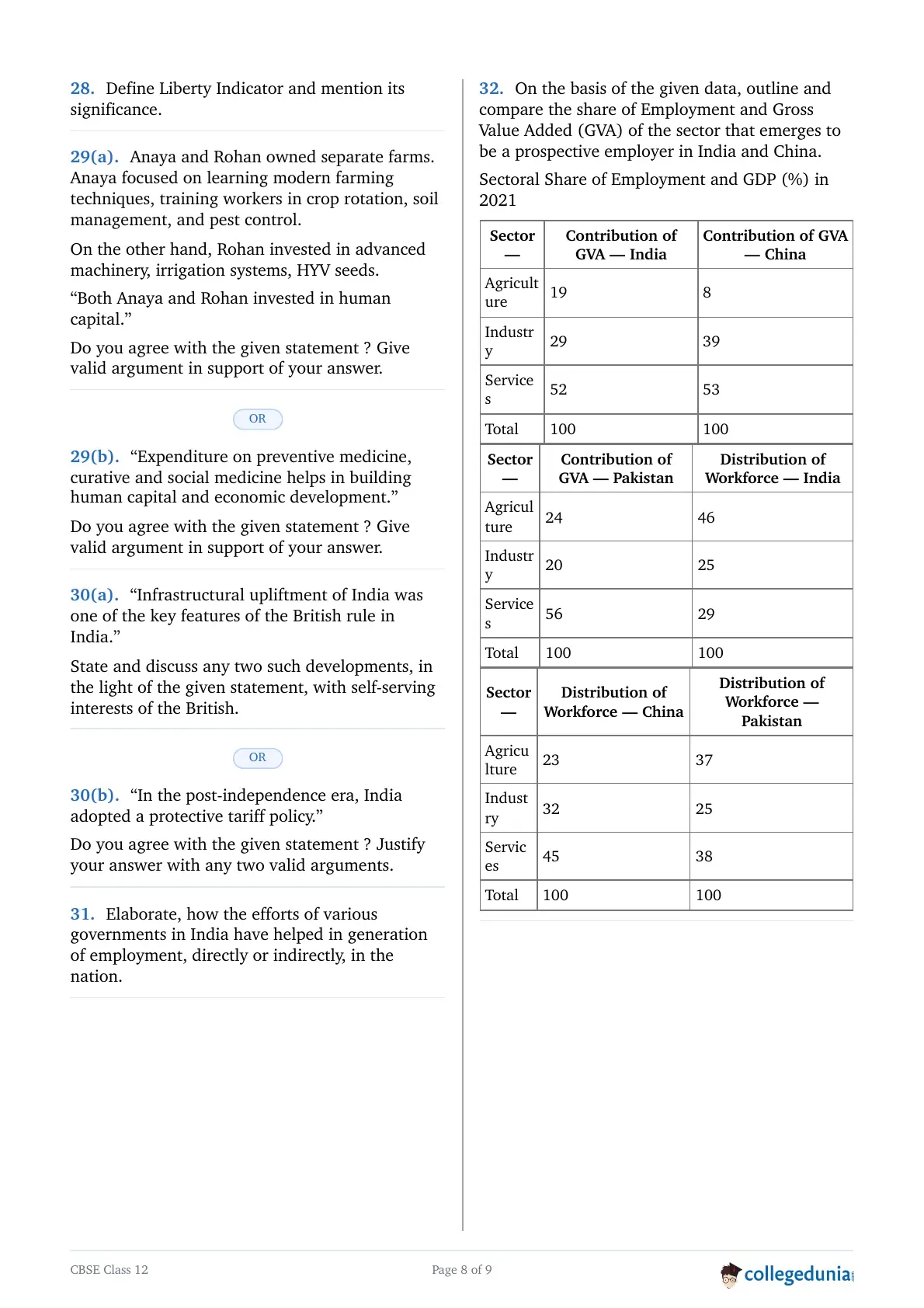
On the basis of the given data, outline and compare the share of Employment and Gross Value Added (GVA) of the sector that emerges to be a prospective employer in India and China.
Sectoral Share of Employment and GDP (%) in 2021
| Sector | Contribution of GVA | Distribution of Workforce | ||||
|---|---|---|---|---|---|---|
| India | China | Pakistan | India | China | Pakistan | |
| Agriculture | 19 | 8 | 24 | 46 | 23 | 37 |
| Industry | 29 | 39 | 20 | 25 | 32 | 25 |
| Services | 52 | 53 | 56 | 29 | 45 | 38 |
| Total | 100 | 100 | 100 | 100 | 100 | 100 |
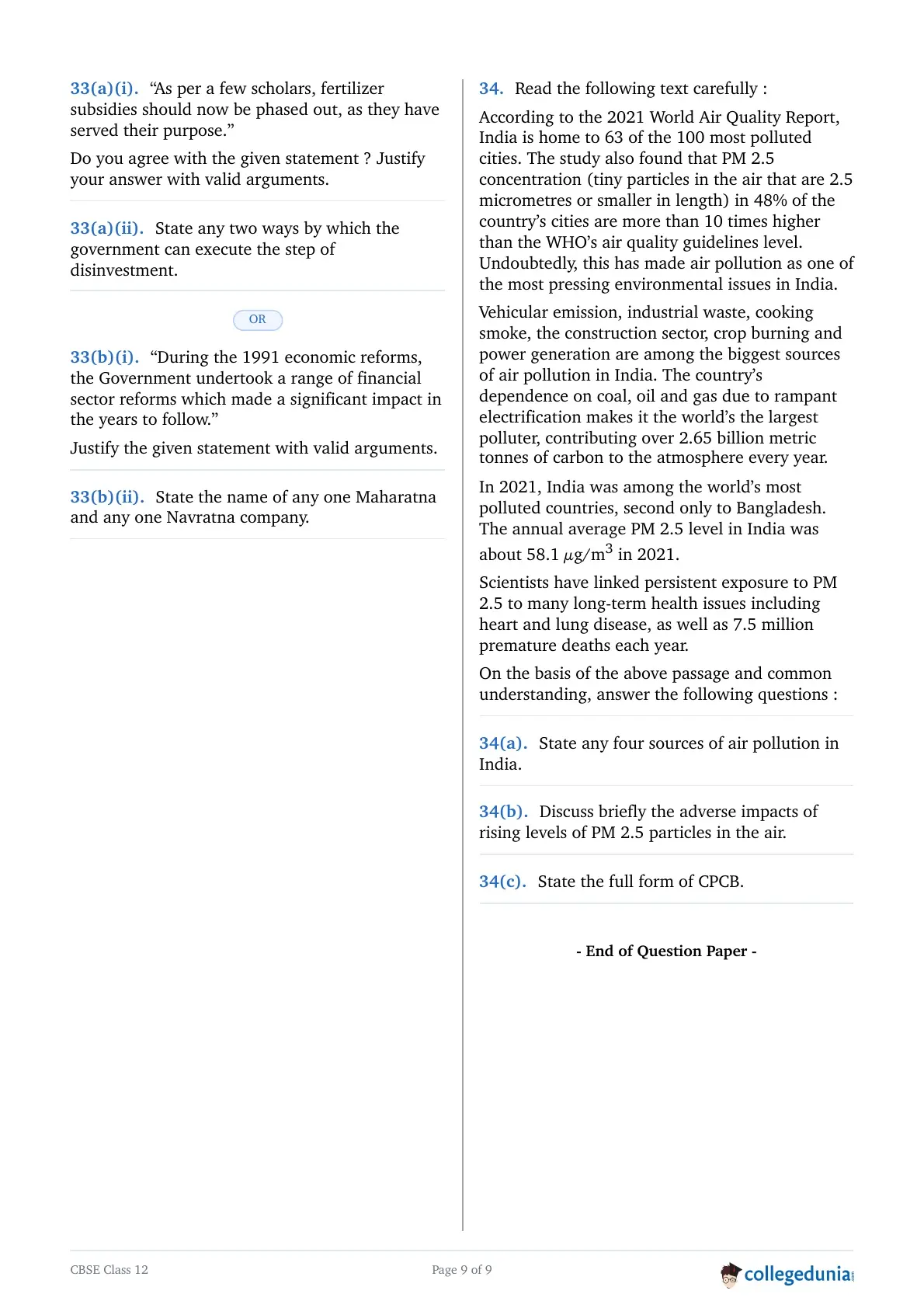
“As per a few scholars, fertilizer subsidies should now be phased out, as they have served their purpose.”
Do you agree with the given statement ? Justify your answer with valid arguments.
State any two ways by which the government can execute the step of disinvestment.
“During the 1991 economic reforms, the Government undertook a range of financial sector reforms which made a significant impact in the years to follow.”
Justify the given statement with valid arguments.
State the name of any one Maharatna and any one Navratna company.
Comprehension:
Read the following text carefully :
According to the 2021 World Air Quality Report, India is home to 63 of the 100 most polluted cities. The study also found that PM 2.5 concentration (tiny particles in the air that are 2.5 micrometres or smaller in length) in 48% of the country’s cities are more than 10 times higher than the WHO’s air quality guidelines level. Undoubtedly, this has made air pollution as one of the most pressing environmental issues in India.
Vehicular emission, industrial waste, cooking smoke, the construction sector, crop burning and power generation are among the biggest sources of air pollution in India. The country’s
Read More
dependence on coal, oil and gas due to rampant electrification makes it the world’s the largest polluter, contributing over 2.65 billion metric tonnes of carbon to the atmosphere every year.In 2021, India was among the world’s most polluted countries, second only to Bangladesh. The annual average PM 2.5 level in India was about 58.1 µg/m3 in 2021.
Scientists have linked persistent exposure to PM 2.5 to many long-term health issues including heart and lung disease, as well as 7.5 million premature deaths each year.
On the basis of the above passage and common understanding, answer the following questions :
Discuss briefly the adverse impacts of rising levels of PM 2.5 particles in the air.
CBSE Class 12 Economics Question Paper Pattern and Marking Scheme
The CBSE Class 12 Economics 2026 theory paper is of 80 marks and has 34 questions, all compulsory, in two sections: Section A (Macro Economics) and Section B (Indian Economic Development). There is no overall choice, but an internal choice (OR) is given in a few questions. The tables below give the paper pattern and the marking rules from the official CBSE question paper and marking scheme.
CBSE Class 12 Economics Question Paper Pattern 2026
| Section | Questions | Question Type | Marks per Question | Marks |
|---|---|---|---|---|
| Section A - Macro Economics | Q1 - Q10 | Multiple choice questions (MCQs) | 1 | 10 |
| Section A - Macro Economics | Q11 - Q12 | Short Answer Type-I (60 to 80 words) | 3 | 6 |
| Section A - Macro Economics | Q13 - Q15 | Short Answer Type-II (80 to 100 words) | 4 | 12 |
| Section A - Macro Economics | Q16 - Q17 | Long Answer type (100 to 150 words) | 6 | 12 |
| Section B - Indian Economic Development | Q18 - Q27 | Multiple choice questions (MCQs) | 1 | 10 |
| Section B - Indian Economic Development | Q28 - Q29 | Short Answer Type-I (60 to 80 words) | 3 | 6 |
| Section B - Indian Economic Development | Q30 - Q32 | Short Answer Type-II (80 to 100 words) | 4 | 12 |
| Section B - Indian Economic Development | Q33 - Q34 | Long Answer type (100 to 150 words) | 6 | 12 |
| Total | 34 questions | 80 |
CBSE Class 12 Economics Marking Scheme 2026
| Marking point | How it is applied |
|---|---|
| Value-point marking | Marks are awarded against the value points given in the official marking scheme; for a question with parts, marks are awarded for each part and then totalled. |
| Own expression | The marking scheme carries suggested value points only. A correct answer in the student's own words is awarded due marks. |
| Competency-based questions | If a competency-based answer is not from the marking scheme but shows the correct competency, due marks are awarded. |
| Errors | An error is penalised only once; no marks are deducted for its cumulative effect. |
| Incorrect answer | A totally incorrect answer is awarded zero (0) marks. |
| Extra question | If a student attempts an extra question, the answer deserving more marks is retained and the other is scored out. |
| Scale of marks | The full scale of 0 to 80 marks is used and full marks are awarded whenever the answer deserves them. |
CBSE Class 12 Economics Unit-Wise Weightage
| Part | Unit | Marks |
|---|---|---|
| Part A - Introductory Macroeconomics | ||
| National Income and Related Aggregates | 10 | |
| Money and Banking | 6 | |
| Determination of Income and Employment | 12 | |
| Government Budget and the Economy | 6 | |
| Balance of Payments | 6 | |
| Total | 40 | |
| Part B - Indian Economic Development | ||
| Development Experience (1947-90) and Economic Reforms since 1991 | 12 | |
| Current Challenges facing Indian Economy | 20 | |
| Development Experience of India - A Comparison with Neighbours | 8 | |
| Total | 40 | |
| Theory Paper | 80 | |
| Project Work | Project File and Viva Voce | 20 |
| Grand Total | 100 |



Comments