

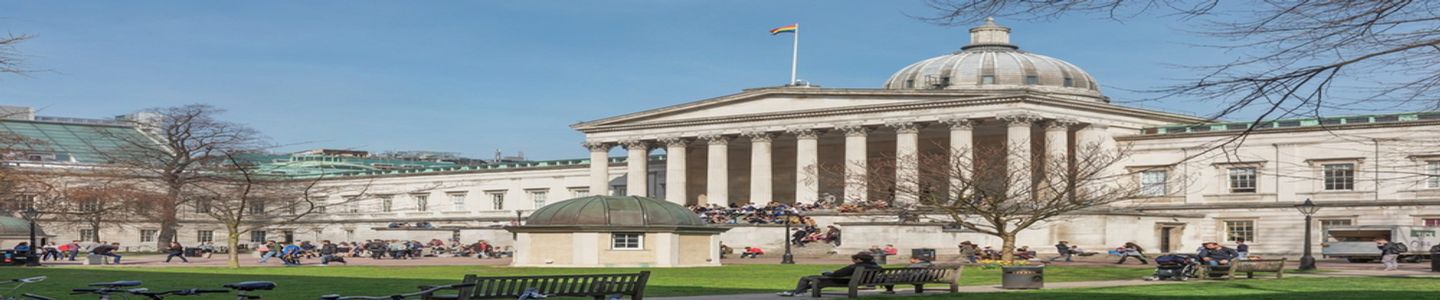


Bachelor of Engineering [BEng] (Biomedical Engineering)
Field of Study:
₹54.1 L/Yr

University College London (UCL) Biomedical Engineering BEng (Bachelor of Engineering) is a three-year, full-time undergraduate degree in London, Bloomsbury, starting September 2027. Eligible Indian-board applicants need five subjects at 95%, 95%, 95%, 90% and 90%, including the required Mathematics and Physics grades. Calculated three-year tuition is £133,200 (INR 1.68 Crore), based on the published international annual fee.
The course trains students to design healthcare technologies through electronics, mechanics, computing and biomedical science, culminating in an individual research project. Its IEP (Integrated Engineering Programme) connects technical study with interdisciplinary design work. This structure suits mathematically prepared applicants who want to build medical technologies and can commit to both independent study and collaborative assessment.
- Students can choose an engineering minor to develop an additional interest such as programming, entrepreneurship or a language.
- The shared first three years allow a potential transfer to the four-year integrated master’s route, subject to UCL’s academic requirements.
- Departmental summer studentships offer opportunities to develop research experience alongside the degree.
Current Admission Status
Applications for the September 2027 intake are Open. International student deadline: 13 January 2027.
The equal consideration cutoff is 18:00 GMT on 13 January 2027, equivalent to 23:30 IST on the same date. Indian applicants should arrange predicted grades and their academic reference before submitting, because the UK portal cutoff controls receipt.
Also Check: UCL Biomedical Engineering Admission
UCL Biomedical Engineering BEng Fees and Living Costs 2027
International tuition for 2027/28 entry is £44,400 per year (INR 56.17 Lakhs) in UCL’s official undergraduate fee schedule. The three-year tuition calculation uses UCL’s cohort guarantee, which retains an exception for government-imposed taxes, levies or similar charges.
September 2027 entry: tuition applies to the standard full-time BEng; totals and instalment amounts below are calculated.
| Fee item | Amount (GBP) | INR equivalent |
|---|---|---|
| International annual tuition | £44,400 | INR 56.17 Lakhs |
| Three-year tuition, calculated as annual fee × 3 | £133,200 | INR 1.68 Crore |
| One-third annual tuition instalment, calculated | £14,800 | INR 18.72 Lakhs |
| 2027 application fee, covering up to five choices | £34.50 | INR 4,364 |
All INR conversions in the article use a conversion rate of GBP 1 = INR 126.50 as of 17 October 2026. Rates fluctuate daily, verify before applying.
Source: UCL undergraduate fee schedule for 2027/28 and the official 2027 application-fee policy.
UCL’s current September-enrolment payment policy permits three equal instalments, due on 31 October, 7 February and 2 May. These are standing policy dates, rather than a separately issued 2027/28 invoice schedule. No BEng-specific deposit amount appears on the checked programme or payment pages, so obtain any deposit instruction from your offer.
- Check the official Biomedical Engineering fee schedule because the programme landing page currently displays an incomplete fee table.
- Budget for a Windows-compatible laptop because some specialist software is supported only on Windows, with higher specifications needed for complex modelling.
- Request separate financial terms before adding the optional industry year because the standard three-year calculation excludes that extra year.
Cost of Living in London for Biomedical Engineering Students
UCL’s 2026/27 living-cost guide provides a prior-cycle reference rather than a confirmed 2027/28 budget. The private-rent illustration below uses its published monthly components, with household bills excluded from rent.
Prior-cycle planning reference: monthly components come from UCL’s 2026/27 guide; totals are calculated from those components.
| Expense | Monthly (GBP) | Monthly (INR) |
|---|---|---|
| Shared private accommodation, excluding household bills | £650 to £1,300 | INR 82,225 to INR 1.64 Lakhs |
| Food | £229 | INR 28,969 |
| Course materials | £26 | INR 3,289 |
| Mobile phone | £26 | INR 3,289 |
| Health and wellbeing | £26 | INR 3,289 |
| Student travelcard, zones 1 to 2 | £119.90 | INR 15,167 |
| Monthly total, calculated | £1,076.90 to £1,726.90 | INR 1.36 Lakhs to INR 2.18 Lakhs |
| Annual total, calculated as 12 × monthly total | £12,922.80 to £20,722.80 | INR 16.35 Lakhs to INR 26.21 Lakhs |
The calculated three-year core budget combines confirmed tuition with prior-cycle living estimates. It totals £171,968.40 (INR 2.18 Crore) to £195,368.40 (INR 2.47 Crore). The arithmetic is three annual tuition payments plus 36 monthly living budgets, holding the living estimate constant without scholarship deductions. This planning illustration excludes household bills, immigration charges, flights, equipment and discretionary spending, so it is not an all-inclusive university quotation.
UCL’s separate 2026/27 halls reference averages £12,480 (INR 15.79 Lakhs) for 39 weeks, which does not provide year-round accommodation. Compare contract length and summer housing before choosing between halls and private rent. The visa maintenance requirement is a separate financial-evidence threshold, covered in the visa section.
Read More: London Student Living Costs
Key insight: The published annual tuition alone requires INR 56.17 Lakhs at the stated exchange rate. Secure tuition funding separately from housing and immigration funds before accepting the BEng offer.
UCL Biomedical Engineering BEng Admission 2027
The BEng admits students for September 2027, with no January intake. UCL’s current course page requires A*AA at A level, corresponding to the Indian-board profile below, with Mathematics and Physics determining subject eligibility.
2027 entry requirements: Indian equivalencies are published through the programme’s country selector, rather than estimated from a generic percentage conversion.
| Qualification or requirement | Published requirement and Indian interpretation |
|---|---|
| A-level route and Indian equivalent | A*AA; UCL’s equivalent for the accepted Indian school boards is five subjects at 95%, 95%, 95%, 90% and 90%. |
| Required subjects | A* and A in Mathematics and Physics in either order; for the accepted national Indian boards, this means 95% and 90% respectively, in either order. |
| Accepted national school boards | CBSE (Central Board of Secondary Education) or CISCE (Council for the Indian School Certificate Examinations). |
| Specified state-board route | Karnataka, Maharashtra, Tamil Nadu or West Bengal: five subjects at 95%, 95%, 95%, 90% and 90%, including three core subjects, with departmental assessment. |
| Additional admissions assessment | Biomedical Engineering is not listed among UCL courses requiring an additional admissions test, selection task or interview. |
A high overall average does not replace the Mathematics and Physics subject conditions, so match predicted marks to both requirements before applying. UCL permits a Biology substitution only when its separate prior-Physics condition is met. Indian applicants using that route should request an assessment of their school certificates rather than assuming Biology removes Physics preparation entirely.
UCL’s published 2025/26 application-cycle data records 1,235 applications, 616 offers and 133 places for its Biomedical Engineering admissions grouping. This grouping is broader than this BEng alone and does not isolate Indian applicants. Use the figures as evidence that meeting the academic threshold does not establish an individual admission probability.
English Language Requirements
This programme requires English Level 1, and UCL’s undergraduate policy explicitly addresses September 2027 entry. Test evidence must be dated on or after 1 September 2025, so an older result may expire before enrolment even if its score qualifies.
For revised TOEFL tests, UCL states: “UCL will continue to accept the TOEFL iBT after 21 January 2026.”
Level 1 for 2027 entry: the two TOEFL rows retain UCL’s separately published scales and must not be treated as interchangeable scores.
| English evidence | Overall requirement | Component requirement or condition |
|---|---|---|
| IELTS (International English Language Testing System), Academic | 6.5 | At least 6.0 in every component. |
| TOEFL (Test of English as a Foreign Language), internet-based test, from 21 January 2026 | 4.5 | 4.0 in reading, writing, speaking and listening. |
| TOEFL internet-based test, before 21 January 2026 | 92 on the earlier 120-point scale | 24/30 in reading and writing; 20/30 in speaking and listening, within the permitted validity period. |
| PTE (Pearson Test of English), Academic | 70 | At least 62 in each Communicative Skill. |
| Indian school-English route | 85 in the specified English subject | CBSE English Core or CISCE compulsory English. |
The test abbreviations above identify alternative English-evidence routes, each with its own component requirements. UCL does not require English evidence with the initial application, allowing an academically eligible applicant to receive a conditional offer. English-medium schooling in India alone should not be substituted for the specified school-English subject or an accepted test.
- Check whether your board certificate meets the 85-mark English route before paying for an additional test.
- For IELTS, meet all four component minima because a qualifying overall score cannot compensate for a band below 6.0.
- Allow time for a complete retest because UCL does not accept IELTS One Skill Retake or TOEFL MyBestScore for this requirement.
Academic Fit and Workload
UCL expects at least 40 study hours per week, including approximately 15 contact hours and substantial independent work. First-year computing, materials and instrumentation make this an engineering course with healthcare applications. Applicants whose main interest is laboratory biology should examine those technical modules before choosing the BEng.
Assessment includes coursework, presentations, group work and examinations, so preparation must extend beyond solving timed school examination papers. The final-year research project offers technical specialisation, while the engineering minor preserves breadth. Choose a minor that strengthens your intended project area rather than assuming every optional module will run.
Tip for Indian students: The official Indian-board profile combines three 95% subjects with two 90% subjects and specific Mathematics and Physics conditions. Ask your referee to report subject-level predictions clearly, then check English evidence separately.
UCL Biomedical Engineering BEng Application 2027
Apply for September 2027 entry by 13 January 2027 through UCAS (Universities and Colleges Admissions Service). This is the application system for the BEng, using institution code U80 and course code HC60, with no campus code.
September 2027 application milestones: UCL publishes one equal consideration deadline, rather than separate international application rounds.
| Milestone | Published timing | Meaning for Indian applicants |
|---|---|---|
| Equal consideration application deadline | 13 January 2027, 18:00 GMT; 23:30 IST, 13 January 2027. | Submit the completed application, reference and payment before the UK cutoff. |
| UCL selection team’s decision aim | End of April, under its current published selection guidance. | This is an operational aim rather than an individual decision appointment. |
| Latest decision date for applications submitted by the January deadline | 12 May 2027. | UCL’s 2027 application guidance supplies this final decision date. |
| Late and Extra application limit, only where the course remains open | 30 June 2027, 18:00 BST; 22:30 IST, 30 June 2027. | This does not confirm a later Biomedical Engineering vacancy. |
| Meeting offer conditions, including English | 1 September 2027, 17:00 BST; 21:30 IST, 1 September 2027. | Follow the exact conditions and date in your offer and applicant portal. |
The university’s UK timezone controls submission; Indian Standard Time conversions are shown beside timed cutoffs. UCL may close Biomedical Engineering after the January deadline even though its wider application system accepts some late applications. Therefore, use the equal consideration deadline as your application target rather than relying on the June system limit.
Build an Application Around Engineering Evidence
Your academic reference, predicted grades and personal statement should explain readiness for the course’s combination of mathematics, physical systems and healthcare design. A useful example could connect a school electronics or coding project to a measurement problem. Explain your own technical decisions and what you learned, rather than merely naming medical devices.
- Enter every achieved and pending secondary qualification before submission because UCL does not accept later qualification additions for meeting offer conditions.
- Ask your referee to connect Mathematics and Physics preparation with the course’s modelling, instrumentation and computing demands.
- Register for Portico, UCL’s applicant portal, when invited and use it for requested documents and scholarship access.
UCL assesses applications received by the deadline on an equal consideration basis, so a complete January submission is not automatically disadvantaged against an October submission. Earlier completion can still give you more time to resolve fee-status and scholarship-access issues. It should improve administrative readiness rather than be treated as a published admission advantage.
Applicants applying independently from India must arrange their academic referee and submit the completed application themselves. If applying through a registered school, confirm its internal deadline because the school must add the reference and release the application. UCL normally requests additional information through its portal rather than inviting unsolicited supporting statements or certificates.
Read More: UCAS Undergraduate Application Process
Application tip: Treat 13 January 2027 at 23:30 IST as the receipt deadline for the complete BEng application. Arrange the referee and qualification record first, because an unfinished school submission cannot secure equal consideration.
UCL Biomedical Engineering BEng Scholarships 2027
The UCL Global Undergraduate Scholarship’s 2027/28 terms and deadline are not published on the checked award page, which still describes 2026/27 entry. Its earlier coverage is useful funding context, but it cannot be deducted from a September 2027 BEng budget.
Funding evidence: the entry scholarship below is a labelled prior-cycle reference; the other awards have current, cycleless rules with restricted eligibility.
| Award and published scope | Published value | INR equivalent | Eligibility and application route |
|---|---|---|---|
| UCL Global Undergraduate Scholarship, 2026/27 reference | 10 full-tuition awards with maintenance and a fixed additional-cost allowance; 20 full-tuition-only awards; three India-specific full-tuition awards. | Full tuition coverage; maintenance and additional-cost cash amounts were not specified. | Overseas fee payers from low-income backgrounds with a submitted full-time undergraduate admission application; separate funding application through Portico. |
| UCL Faculty Undergraduate Scholarships for Excellence, current published cycleless scheme | £3,000 for one year, paid in the following academic year. | INR 3.80 Lakhs | Already enrolled first- and second-year undergraduates; departmental and faculty nomination, with no student application. |
| Undergraduate Preparatory Certificates (UPC) Progression Scholarship, current published cycleless scheme | Two awards of £5,000 per year towards undergraduate tuition. | INR 6.33 Lakhs per year | Only students completing UCL’s eligible international foundation pathways and progressing to a UCL degree; automatic consideration based on pathway performance. |
The Global Undergraduate Scholarship is assessed on financial need, rather than being an automatic reward for meeting the BEng grade threshold. Its prior-cycle process required an admission application and confirmed fee status before applicants could access funding. Applicants needing support should prepare household financial evidence and monitor the official Global Undergraduate Scholarship page for 2027 terms.
The historical 2026/27 scholarship deadline was 27 April 2026 at 17:00 BST, equivalent to 21:30 IST on the same date. That closed date does not establish a 2027 cutoff. Full tuition-only coverage also leaves London living costs and immigration expenses to be funded separately.
- Treat the Faculty Excellence award as potential later-year support because nomination requires enrolment and cannot fund your initial arrival.
- Consider the UPC award only if you already need UCL’s foundation pathway because direct school-leaver entry does not qualify for it.
- Do not subtract a Global Scholarship from the confirmed BEng tuition until UCL issues an award naming your intake and coverage.
The UPC Progression Scholarship rewards the strongest performer on each eligible foundation pathway. It renews subject to the degree-performance condition published by UCL. Consequently, an extra foundation year should be justified by admission needs, since the scholarship offers only two awards and requires prior foundation enrolment.
Also Check: UCL Scholarships for Indian Students
Scholarship reality: The three India-specific full-tuition places belong to the published 2026/27 scheme. Keep the 2027 BEng financing decision conditional on a new award notice rather than assuming that allocation will recur.
UCL Biomedical Engineering BEng Salary 2027
A BEng-only graduate salary or job-offer rate is not published in the checked course evidence. The closest official earnings evidence covers UCL Engineering graduates, while the department’s named employers span Biomedical Engineering and Medical Physics at multiple degree levels.
Earnings scope: the UCL subject-level figures below describe the 2022/23 graduating cohort at 15 months; the occupational range is a separate external market benchmark.
| Evidence and scope | Annual gross pay (GBP) | INR equivalent |
|---|---|---|
| UCL Engineering subject-level median, 2022/23 graduates; 50 respondents | £34,500 | INR 43.64 Lakhs |
| UCL Engineering subject-level published typical range, same cohort | £32,000 to £40,000 | INR 40.48 Lakhs to INR 50.60 Lakhs |
| External clinical-engineer market benchmark, starter to experienced, National Careers Service | £26,000 to £75,000 | INR 32.89 Lakhs to INR 94.88 Lakhs |
Source: official Graduate Outcomes data displayed by Discover Uni and the National Careers Service clinical-engineer profile.
For the same 2022/23 UCL Engineering cohort, 86% were working or studying after 15 months, based on 100 respondents. Among the separately reported occupation sample of 75, engineering professionals accounted for 25% and information technology professionals for 19%. These subject-level results are not BEng placement rates; inspect the official earnings and employment dataset before using them in a financing decision.
Clinical, Industry and Research Career Routes
UCL’s programme description cites 2017 to 2023 graduate cohorts entering research, clinical science, healthcare and biomedical engineering-related industries. Its departmental employer page names Medtronic, Gowerlabs and Vision RT, alongside hospitals including Great Ormond Street and University College London Hospital. These are reported destinations across departmental qualifications, without a BEng-specific hiring volume or sponsorship commitment.
Clinical engineering involves developing and maintaining medical equipment, aligning with the BEng’s instrumentation, clinical engineering and imaging modules. The National Careers Service also describes a postgraduate clinical-scientist training route. Applicants seeking that route should examine its additional selection and training requirements rather than assuming the BEng alone completes professional clinical training.
The department’s 2023 summer-project list includes a BEng student developing a compact robotic manipulator for image-guided neurosurgery. That individual example demonstrates access to a relevant project, not the probability of obtaining one. Ask how summer studentships are selected and whether their timing fits the technical experience you want before graduation.
Research careers require a different funding horizon because UCL’s departmental careers page says academic research typically requires a doctorate. A three-year BEng can therefore be the first stage of a longer training plan. Applicants targeting academic research should establish how they would fund later study before treating the undergraduate budget as their final educational cost.
Cost, Funding and Return on Investment
The ROI (return on investment) question starts with the calculated core budget of INR 2.18 Crore to INR 2.47 Crore. That illustration combines confirmed tuition with prior-cycle living references and excludes several additional costs. Its financial case depends on funding secured and the career route pursued, without enough BEng-specific earnings evidence for a credible payback forecast.
- Because three-year tuition alone is INR 1.68 Crore, request a loan repayment schedule that also preserves cash for the separately estimated London living costs.
- The Engineering subject-level salary median is gross pay, so test repayment affordability after tax and housing rather than treating its INR conversion as disposable income.
- The current Graduate visa rule provides 18 months for applications from January 2027, so investigate eligible employment routes before graduation rather than financing an indefinite UK search.
- For an India-return plan, obtain India-based role and salary evidence because UCL’s UK subject-level earnings cannot substantiate repayments from Indian employment.
Take-home pay depends on tax, National Insurance, pension contributions and individual circumstances. Use the official UK take-home pay calculator with a real offer and subtract the relevant housing budget. An unconfirmed entry scholarship should remain outside that repayment calculation until its award terms are issued.
ROI reality: UCL provides relevant technical projects and reported departmental career destinations, but the available earnings proxy covers Engineering broadly. A heavily debt-funded BEng needs a financing case that survives both an India return and a shorter UK job-search window.
UK Visa for UCL Biomedical Engineering BEng Students 2027
Indian applicants for UCL’s three-year BEng need Student visa funding separate from the university’s living-cost illustration. Current charges are £558 (INR 70,587), plus a student healthcare surcharge of £776 (INR 98,164) per chargeable year. Skilled Worker settlement currently requires five qualifying years, subject to eligibility; the Graduate visa does not itself provide that settlement route.
- London maintenance from 30 November 2026 is £14,130 (INR 17.87 Lakhs) for nine months; check the required 28-day holding period separately from outstanding tuition.
- Current Graduate visa rules give applications from 1 January 2027 an 18-month work window, so recheck eligibility and duration before your expected 2030 completion.
- Skilled Worker sponsorship normally requires £41,700 (INR 52.75 Lakhs) or the higher occupation going rate; eligible discounted and healthcare routes have separate salary rules.
- Undergraduate students normally cannot sponsor dependants, but qualifying government-sponsored students on courses longer than six months can fall within an exception.
Read More: UK Student Visa Costs for Indian Applicants
Visa reality: The BEng’s three-year duration places graduation beyond the date these immigration rules were checked. Confirm the visa charges before applying in 2027 and the work-route rules again before graduation.
UCL Biomedical Engineering BEng Ranking 2027
UCL is ranked 10th globally for Biomedical Engineering in ShanghaiRanking’s 2026 Global Ranking of Academic Subjects. This is subject-level research evidence rather than a ranking of the undergraduate BEng’s teaching, placements or student experience.
Ranking edition: 2026, shown as research context for applicants considering September 2027 entry.
| Ranking | Subject | Position | Scope |
|---|---|---|---|
| ShanghaiRanking Global Ranking of Academic Subjects 2026 | Biomedical Engineering | 10 globally | University-level research in this subject. |
The ranking is relevant to the BEng’s research-project model, because final-year projects can draw on UCL research groups and healthcare collaborations. It does not show how many undergraduates enter a particular laboratory or secure a particular job. Ask the department about project allocation and supervision in your intended area before using the ranking to justify the tuition commitment.
Check Out: UCL Subject Rankings
Honest take: The Biomedical Engineering research position supports investigating UCL’s project opportunities. Your decision still needs a match between available projects, the technical curriculum and a funded three-year budget.
UCL’s Biomedical Engineering BEng suits applicants who want to turn mathematics, electronics and computing into healthcare technologies. Its interdisciplinary curriculum and individual research project offer a coherent route for that interest, with the minor providing additional breadth. The material tradeoff is the substantial international cost alongside earnings evidence that covers Engineering broadly. Submit a complete application by 13 January 2027, then make acceptance dependent on confirmed funding and a budget that includes the excluded arrival costs.
UCL Biomedical Engineering BEng FAQs
Ques. Should I choose UCL’s Biomedical Engineering BEng or MEng?
Ans. The BEng suits a three-year engineering degree plan, while the integrated master’s adds further specialist study and project work. UCL shares the first three years and permits transfer subject to its academic conditions. Choose the BEng if its technical foundation and research project meet your immediate training needs, while preserving funding flexibility for any later study.
Ques. Can strong Indian school marks and school English satisfy UCL Biomedical Engineering entry?
Ans. Check academic eligibility and English evidence separately, because the specified board marks and Mathematics and Physics conditions serve a different purpose from English proficiency. A qualifying CBSE English Core or CISCE compulsory-English result can provide the English route. Strong marks still do not establish admission odds, since UCL also assesses the statement and academic reference.
Ques. What should an Indian family budget beyond UCL Biomedical Engineering tuition?
Ans. The calculated INR 2.18 Crore to INR 2.47 Crore core illustration already adds 36 months of prior-cycle living estimates to confirmed tuition. It excludes household bills, equipment, flights, immigration charges and discretionary spending, so obtain those quotations before finalising borrowing. A 39-week halls contract also requires a separate summer-housing decision.
Ques. Should I wait for my English test before applying to UCL Biomedical Engineering?
Ans. UCL allows English evidence after the initial application, so academically ready applicants can meet the January equal consideration deadline without waiting for a test result. First check whether the Indian school-English route applies. If testing remains necessary, allow a retest opportunity before the offer-condition deadline rather than assuming a late BEng vacancy will remain available.
Ques. Can a UCL scholarship make the Biomedical Engineering BEng fully affordable?
Ans. A tuition-only scholarship leaves accommodation, everyday costs and immigration expenses unpaid, while the prior Global scheme’s broader tier also included maintenance support. However, the checked Global award page does not yet publish September 2027 terms. Base acceptance on the actual award letter and remaining family contribution, since enrolled-student and foundation-progression awards cannot be assumed for a direct entrant.
Important Alert
- Equal Consideration Deadline for 2027 Intake - Jan 13, 2027
Tuition Fees
| Year | 1st Year Fees |
|---|---|
| Tuition Fees | ₹5408809 (GBP 42700) |
Other Expenses
| Head | Avg Cost Per Year |
|---|---|
| Housing | ₹2219765 (GBP 17524) |
| Food | ₹320982 (GBP 2534) |
Previous Year Tuition Fees
| Year | 1st Year Fees |
|---|---|
| 2024 | ₹5041466 (GBP 39800) |
Important Dates
| Event | Application Date |
|---|---|
| Application Opens for 2027 Intake | May 12, 2026 |
| Final Application Deadline for 2026 Intake | |
| Equal Consideration Deadline for 2027 Intake | Jan 13, 2027 |
| Final Application Deadline for 2027 Intake | Jun 30, 2027 |
Scores Required
Required Document List
- Online Application
- Application Fee
- Official Transcripts and Degree Conferral (Proof of Degree)
- Academic Records
- English Language Proficiency Testing


Do you think the Rankings are wrong ? Report Here
TOP Scholarships
| Scholarship name | Award amount | Eligibility |
|---|---|---|
| Global Undergraduate Scholarship | Varies | Based on financial need |
| UPC Progression Scholarships | £5,000 per year | Based on academic merit |
Key Resources for Your Study Abroad Journey


Scholarship Grants & Financial Aids
| Name | Scholarship Per Student | Level of Study | Type | |
|---|---|---|---|---|
| Axol Science Scholarship | Scholarship per student₹ 2.5 L/Yr$2,000 | Level Of StudyBachelor | TypeCompany-Sponsored | |
| Business Administration Scholarships | Scholarship per studentVariable Amount | Level Of StudyBachelor | TypeMerit-Based | |
| VueVille Future Technology Scholarship | Scholarship per student₹ 1.3 L/Yr$1,000 | Level Of StudyBachelor | TypeMerit-Based | |
| Forktip Women’s- Innovation Scholarship | Scholarship per studentVariable Amount | Level Of StudyBachelor | TypeCollege-Specific |
Similar Programs
| Program | Important Date | Total Fees | Median Exams Score | Action |
|---|---|---|---|---|
| INR 89.4 L/Yr GBP 70,554 /Yr |
| |||
| INR 49.3 L/Yr GBP 38,900 /Yr | ||||
| INR 57.6 L/Yr GBP 45,500 /Yr |
| |||
Equal Consideration Deadline for 2027 Intake (13th Jan 2027) Final Application Deadline for 2027 Intake (30th Jun 2027) | INR 54.1 L/Yr GBP 42,700 /Yr |
|


Do you think the Dates are wrong ? Report Here

interested in this College ?
Follow & Share this college to get information about admission.



Comments
Found 1 Comment