Question:
Which of the following tendons passes below the sustentaculum tali?
Which of the following tendons passes below the sustentaculum tali?
Show Hint
The shelf acts as a pulley for the tendon heading to the great toe.
Updated On: Jun 24, 2026
- Tibialis anterior
- Tibialis posterior
- Flexor digitorum longus
- Flexor hallucis longus
Show Solution

Verified By Collegedunia
The Correct Option is D
Solution and Explanation
Step 1: Recall the sustentaculum tali. It is a shelf-like bony projection on the medial side of the calcaneus that supports the talus. Its under-surface carries a groove.
Step 2: Identify the tendon in that groove. The flexor hallucis longus tendon runs in the groove on the under-surface (inferior surface) of the sustentaculum tali. This is why the structure helps pulley the tendon toward the great toe.
Step 3: Exclude the other tendons. Tibialis anterior crosses the front of the ankle and inserts on the medial cuneiform and first metatarsal, nowhere near the sustentaculum. Flexor digitorum longus passes medial to and just above the sustentaculum, not under it.
Step 4 (second part of the original question): The tendon that gains attachment on the sustentaculum tali is the tibialis posterior. Tibialis posterior inserts mainly on the navicular tuberosity but also sends slips to the sustentaculum tali and other tarsal and metatarsal bones, so its attachment is on the sustentaculum, whereas flexor hallucis longus merely grooves its under-surface.
Step 5: So the tendon passing below the sustentaculum tali is flexor hallucis longus, and the tendon attaching to it is tibialis posterior.
The answer is D. Flexor hallucis longus.
Step 2: Identify the tendon in that groove. The flexor hallucis longus tendon runs in the groove on the under-surface (inferior surface) of the sustentaculum tali. This is why the structure helps pulley the tendon toward the great toe.
Step 3: Exclude the other tendons. Tibialis anterior crosses the front of the ankle and inserts on the medial cuneiform and first metatarsal, nowhere near the sustentaculum. Flexor digitorum longus passes medial to and just above the sustentaculum, not under it.
Step 4 (second part of the original question): The tendon that gains attachment on the sustentaculum tali is the tibialis posterior. Tibialis posterior inserts mainly on the navicular tuberosity but also sends slips to the sustentaculum tali and other tarsal and metatarsal bones, so its attachment is on the sustentaculum, whereas flexor hallucis longus merely grooves its under-surface.
Step 5: So the tendon passing below the sustentaculum tali is flexor hallucis longus, and the tendon attaching to it is tibialis posterior.
The answer is D. Flexor hallucis longus.
Was this answer helpful?
0
0
Top NEET PG Anatomy Questions
- A defect in which of the following forms the structure marked below?

- A student had his jaw locked while yawning. Which of the following muscles is attached to the articular disc of the temporomandibular joint?
- The given histology image is of ?

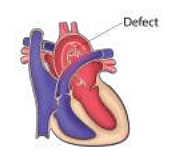
- A defect in which of the following aortic arches causes the defect shown in the image?
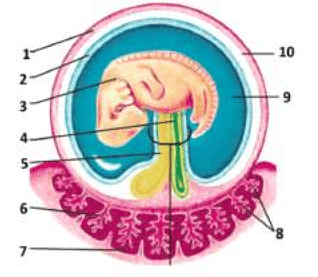
- Which of the following structures develops from the structure marked 4?
View More Questions
Top NEET PG Questions
- A patient hailing from Delhi presents with fever, arthralgia, and extensive petechial rash for 3 days. Lab investigations revealed a hemoglobin of 9 g/ dL, a white blood cell count of 9000 cells/mm3, a platelet count of 20000 cells/mm3, and a prolonged bleeding time. The clotting time was normal. What is the most likely diagnosis?
- Which of the following statements is true about Trichomonas vaginalis?
- A lady from West Rajasthan presented with an ulcer surrounded by erythema on the right leg. Microscopy of the biopsy from the edge of the ulcer showed organisms with dark staining nuclei and kinetoplast. What is the most likely causative agent?
- A child presents with a fever and a rash. Urine examination showed cells with owl's eye appearance. What is the most likely diagnosis?
- Infection with Clonorchis sinensis is associated with an increased risk of__?
View More Questions