What is the best time to collect the medicinal bark material?
Show Hint
- Post flowering
- Before the leaf falls
- Pre flowering
- After the leaf falls

The Correct Option is D
Approach Solution - 1
The best time to collect medicinal bark is after the leaf falls, as this ensures that the plant is in its dormant phase, reducing stress and damage. During this period, the active phytochemical compounds are at their highest concentration, and there is minimal sap flow, making the bark easier to peel and store. Collecting the bark at other stages is less effective.
Post-flowering (A) is a phase where the plant directs its resources to seed production, resulting in lower medicinal compound concentration. Before the leaf falls (B), the tree is actively transporting nutrients, leading to a higher moisture content in the bark. Pre-flowering (C) is another phase where the plant is focusing on bud and flower formation rather than storing medicinal compounds in the bark.
Thus, harvesting bark after the leaves have fallen ensures maximum potency and better preservation of medicinal properties.
Approach Solution -2
Timing of collection matters a great deal in pharmacognosy because the concentration of active compounds and the ease of processing both change with the plant's seasonal cycle. Let's look at what is happening physiologically at each proposed collection time:
- Post flowering: After flowering, the plant channels much of its stored energy and nutrients into developing seeds and fruit, rather than storing compounds in the bark. This diverts resources away from bark, so it is not the best time for bark collection.
- Before the leaf falls: Before leaf fall, the plant is still actively moving water and nutrients up and down through its vascular tissue, including through the bark. This active sap flow leaves the bark with a higher moisture content, which makes it harder to peel cleanly and slower to dry for storage.
- Pre flowering: In the run-up to flowering, the plant's metabolic activity is geared toward forming buds and flowers, drawing resources toward those structures instead of concentrating compounds in the bark. This makes the bark less potent at this stage.
- After the leaf falls: Once leaves have fallen, the plant enters a dormant phase where sap flow through the bark slows sharply. With less water movement and reduced metabolic demand elsewhere, active constituents tend to be more concentrated in the bark, and the drier, less sappy bark is also easier to peel, handle, and dry without spoilage.
Since dormancy brings both a higher concentration of active constituents and easier physical handling of the bark, the period right after leaf fall gives the best combination of potency and practicality for collection.
So the correct answer is after the leaf falls.
Top GPAT Pharmacognosy Questions
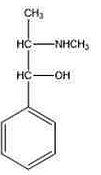
The above structure is of:- Which of the following materials are specified as a suitable diluent for powdered opium
A. Powdered grass
B. Powdered cocoa husk
C. Lactose colored with burnt sugar
D. Powdered digitalis
Choose the correct answer from the options given below: - HPTLC analysis is useful for following types of analysis of herbal drugs
A. Quantitative estimation of marker compound
B. Authentication of extracts
C. Detection of pesticides
D. Standardization of herbal drugs
Choose the correct answer from the options given below: - Anthranilic acid is an immediate precursor in the formation of
- Tropane nucleus is combination of
Top GPAT Factors influencing quality of crude drugs Questions
Top GPAT Questions
- Match the symbols in the List I with the terms used in the List II of conductance measurements, and
List I
SymbolsList II
TermsA \(\Omega^{-1}\) I Specific conductance B \(∧\) II Electrical conductance C k III Specific resistance D \(\rho\) IV Equivalent conductance
Choose the correct answer from the options given below: - Cottrell’s method is used for the measurement of:
- Match the statements in List I with their correct answers in List II, respectively, in respect to modified 1st law of thermodynamics, and
List I
List II
A Constant heat (q = 0) I Isothermal B Reversible process at constant temperature (dT = 0) II Isometric C Constant volume (dV = 0) III Adiabatic D Constant pressure (dP = 0) IV Isobar
Choose the correct answer from the options given below: - Boric acid with molecular weight 61.83 was partitioned between water and amyl alcohol at 25 °C. The amount of boric acid was determined to be 0.24 g in 250 ml of amyl alcohol and 0.32 g in 100 ml water. The partition coefficient of boric acid between water and amyl alcohol, when calculated at molar concentration for each of the solution, is:
- Drugs ‘A’, ‘B’ and ‘C’ follow zero order, first order and second order degradation kinetics, respectively, but have the same rate constant. Which of the following statement is true in this respect: