Question:
The biological name of Indian Bdellium is:
The biological name of Indian Bdellium is:
Show Hint
Commiphora wightii, also known as Indian Bdellium, is an important medicinal plant used in Ayurveda for treating various ailments, particularly inflammatory conditions.
Updated On: Jul 14, 2026
- Commiphora mukul
- Commiphora berryi
- Commiphora wightii
- Commiphora molmol
Show Solution

Verified By Collegedunia
The Correct Option is C
Approach Solution - 1
The biological name of Indian Bdellium is Commiphora wightii. It is a plant species from the Commiphora genus, and it is used in traditional medicine for its anti-inflammatory and antimicrobial properties.
Was this answer helpful?
0
0
Show Solution
Verified By Collegedunia
Approach Solution -2
All four options are species within the same genus, Commiphora, so the question is really asking which particular species is the source of Indian Bdellium, also called guggul.
- Commiphora mukul: This name was historically used for the guggul tree, but taxonomic revision has reclassified this species; the accepted current name for the plant yielding guggul (Indian Bdellium) resin is a different species name below.
- Commiphora berryi: This is a separate Commiphora species found in India, but it is not the recognised source of the oleo-gum-resin known as Indian Bdellium.
- Commiphora wightii: This is the currently accepted botanical name for the guggul plant, a small thorny shrub native to arid regions of Rajasthan and Gujarat, whose oleo-gum-resin, obtained by making incisions in the bark, is known in commerce as Indian Bdellium or guggul, and used traditionally for its anti-inflammatory and lipid-lowering effects.
- Commiphora molmol: This species is the source of true myrrh, an oleo-gum-resin from Africa and the Arabian Peninsula, a different drug from Indian Bdellium.
Since the resin marketed as Indian Bdellium is obtained specifically from the guggul shrub, whose current accepted name is Commiphora wightii, the correct answer is Commiphora wightii.
Was this answer helpful?
0
0
Top GPAT Pharmacognosy Questions
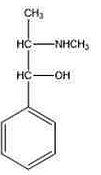
The above structure is of:- Which of the following materials are specified as a suitable diluent for powdered opium
A. Powdered grass
B. Powdered cocoa husk
C. Lactose colored with burnt sugar
D. Powdered digitalis
Choose the correct answer from the options given below: - HPTLC analysis is useful for following types of analysis of herbal drugs
A. Quantitative estimation of marker compound
B. Authentication of extracts
C. Detection of pesticides
D. Standardization of herbal drugs
Choose the correct answer from the options given below: - Anthranilic acid is an immediate precursor in the formation of
- Tropane nucleus is combination of
View More Questions
Top GPAT Traditional herbal drugs Questions
- Limit for the following heavy metal/s is/are mentioned in the WHO guidelines for herbal drug evaluation.
(A) Cadmium
(B) Lead
(C) Mercury
(D) Arsenic
Choose the correct answer from the options given below: - Marker compound analysis is one of the useful methods for evaluation of herbal drugs. The following statement is NOT true about marker compound analysis:
- The following classification of herbal drugs gives better understanding of biosynthetic pathway in the drug
- The major property of Ayurvedic herbs, "Rasa" indicates
Top GPAT Questions
- Match the symbols in the List I with the terms used in the List II of conductance measurements, and
List I
SymbolsList II
TermsA \(\Omega^{-1}\) I Specific conductance B \(∧\) II Electrical conductance C k III Specific resistance D \(\rho\) IV Equivalent conductance
Choose the correct answer from the options given below: - Cottrell’s method is used for the measurement of:
- Match the statements in List I with their correct answers in List II, respectively, in respect to modified 1st law of thermodynamics, and
List I
List II
A Constant heat (q = 0) I Isothermal B Reversible process at constant temperature (dT = 0) II Isometric C Constant volume (dV = 0) III Adiabatic D Constant pressure (dP = 0) IV Isobar
Choose the correct answer from the options given below: - Boric acid with molecular weight 61.83 was partitioned between water and amyl alcohol at 25 °C. The amount of boric acid was determined to be 0.24 g in 250 ml of amyl alcohol and 0.32 g in 100 ml water. The partition coefficient of boric acid between water and amyl alcohol, when calculated at molar concentration for each of the solution, is:
- Drugs ‘A’, ‘B’ and ‘C’ follow zero order, first order and second order degradation kinetics, respectively, but have the same rate constant. Which of the following statement is true in this respect:
View More Questions