Question:
In dislocation of the jaw, displacement of the articular disc beyond the temporomandibular (TM) joint results from spasm or excessive contraction of which of the following muscles?
In dislocation of the jaw, displacement of the articular disc beyond the temporomandibular (TM) joint results from spasm or excessive contraction of which of the following muscles?
Show Hint
Find the muscle that attaches to the articular disc itself and pulls the mandible forward.
Updated On: Jul 8, 2026
- Buccinator
- Lateral pterygoid
- Masseter
- Temporalis
Show Solution

Verified By Collegedunia
The Correct Option is B
Solution and Explanation
Step 1: Recall the muscle that moves the disc and condyle forward.
The lateral pterygoid is the main muscle that protrudes the mandible. Its upper head attaches directly onto the articular disc and the capsule of the temporomandibular joint, and its lower head attaches onto the neck of the mandibular condyle.
Step 2: Explain the mechanism of dislocation.
When the lateral pterygoid contracts too strongly or goes into spasm, for example during a wide yawn or forced mouth opening, it pulls both the condyle and the disc forward, past the summit of the articular eminence. Once the condyle slips in front of the eminence, the jaw locks open, this is TMJ dislocation, and the disc is displaced along with it.
Step 3: Rule out the other muscles.
Buccinator is a muscle of the cheek involved in chewing and blowing, not in moving the condyle or disc. Masseter and temporalis are both powerful muscles of mastication that close the jaw (elevate the mandible) and do not pull the disc or condyle forward past the eminence, if anything, they resist the movement that causes dislocation.
Step 4: Final conclusion.
The muscle responsible for anterior displacement of the disc and condyle beyond the joint, causing dislocation, is the lateral pterygoid, since it is the muscle that inserts on both the disc and the condylar neck and drives the mandible forward.
\[ \boxed{\text{Lateral pterygoid}} \]
The lateral pterygoid is the main muscle that protrudes the mandible. Its upper head attaches directly onto the articular disc and the capsule of the temporomandibular joint, and its lower head attaches onto the neck of the mandibular condyle.
Step 2: Explain the mechanism of dislocation.
When the lateral pterygoid contracts too strongly or goes into spasm, for example during a wide yawn or forced mouth opening, it pulls both the condyle and the disc forward, past the summit of the articular eminence. Once the condyle slips in front of the eminence, the jaw locks open, this is TMJ dislocation, and the disc is displaced along with it.
Step 3: Rule out the other muscles.
Buccinator is a muscle of the cheek involved in chewing and blowing, not in moving the condyle or disc. Masseter and temporalis are both powerful muscles of mastication that close the jaw (elevate the mandible) and do not pull the disc or condyle forward past the eminence, if anything, they resist the movement that causes dislocation.
Step 4: Final conclusion.
The muscle responsible for anterior displacement of the disc and condyle beyond the joint, causing dislocation, is the lateral pterygoid, since it is the muscle that inserts on both the disc and the condylar neck and drives the mandible forward.
\[ \boxed{\text{Lateral pterygoid}} \]
Was this answer helpful?
0
0
Top NEET PG Anatomy Questions
- A defect in which of the following forms the structure marked below?

- A student had his jaw locked while yawning. Which of the following muscles is attached to the articular disc of the temporomandibular joint?
- The given histology image is of ?

- A defect in which of the following aortic arches causes the defect shown in the image?
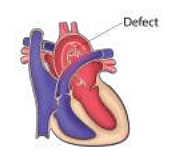
- Which of the following structures develops from the structure marked 4?
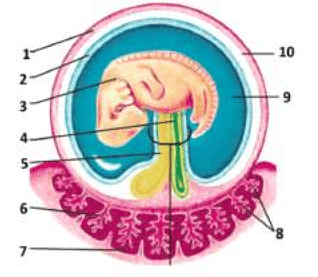
View More Questions
Top NEET PG Questions
- A patient hailing from Delhi presents with fever, arthralgia, and extensive petechial rash for 3 days. Lab investigations revealed a hemoglobin of 9 g/ dL, a white blood cell count of 9000 cells/mm3, a platelet count of 20000 cells/mm3, and a prolonged bleeding time. The clotting time was normal. What is the most likely diagnosis?
- Which of the following statements is true about Trichomonas vaginalis?
- A lady from West Rajasthan presented with an ulcer surrounded by erythema on the right leg. Microscopy of the biopsy from the edge of the ulcer showed organisms with dark staining nuclei and kinetoplast. What is the most likely causative agent?
- A child presents with a fever and a rash. Urine examination showed cells with owl's eye appearance. What is the most likely diagnosis?
- Infection with Clonorchis sinensis is associated with an increased risk of__?
View More Questions